

Art in Chimbote
In the territories where the Province of Santa is located today, art has been developed since ancient times, from geoglyphs and pottery to current artistic expressions such as culinary art, painting, music, dance, crafts, sculpture, among others.
Artistic Expressions in Chimbote and the Santa Province
Allegory to Fishing

La Alegoría a la Pesca es un emblemático monumento escultórico ubicado en el ovalo San Pedro de Chimbote, ideado y construido bajo la dirección del maestro Víctor Delfín, reconocido escultor, artesano, pintor y activista cultural de talla internacional. La obra fue inaugurada a finales de 1995.
En este monumento Víctor Delfín quiso plasmar la histórica riqueza porteña de Chimbote, peces y aves estilizadas con evidentes influencias mochicas adornan todo el contorno de la obra de arte, cabe resaltar que la obra no fue terminada.
The Green Pastries

Los Pasteles Verdes was a Latin pop group that reached its peak popularity in the 1970s. They originated in Chimbote and became the most successful Peruvian group in Peru, both nationally and internationally. It was founded by guitarist Víctor Hugo Acuña and keyboardist César Acuña, who are brothers.
In 1973, Los Pasteles Verdes were formed with singers: Aldo Guibovich, German Laos, drummer Jorge Luis Príncipe, bassist Miguel Moreno, and percussionist Juan Vásquez.
Their song "Angelitos Negros" was their first hit throughout Latin America, which preceded the release of their debut "Recuerdos de Una Noche," a song that still plays on oldies radio stations and digital platforms today.
Boulevard de Chimbote: Paseo de la Cultura

This work was built during the administration of Mayor Guzman Aguirre Altamirano (1996-1998) and inaugurated on December 6, 1998. Its main objective was to “Consolidate the cultural identity and tourism promotion of Chimbote”.
In its early days, the Isla Blanca boulevard was the favorite place for hundreds of people who visited daily to see the water fountains with light shows, the amphitheater, and the statues, promoting commerce and family events.
San Pedrito y el arte

San Pedrito es una de las festividades mas grandes del norte peruano, durante varios días se realizan distintas actividades como misas, desfiles y ceremonias, pero también existe un espacio para el arte, los días centrales de esta festividad son el 28 y 29 de junio, sin embargo las actividades se distribuyen en un programa de un poco mas de 10 días.
Durante este itinerario se encuentran programadas actividades relacionadas al arte como festivales de danzas típicas, el Festival Gastronómico "Chimbote Capital del Ceviche", el Festival de la Causa Chimbotana, Ferias de artesanos, ferias gastronómicas, conciertos, concursos de pintura, exposición de esculturas de arena, etc.
El arte urbano se apodera de las calles

El en espacios públicos tiene como propósito, transformar los espacios cotidianos, fortalecer la identidad comunitaria y actúar como un motor de desarrollo social y económico.
Convierte fachadas grises, paredes aburridas y zonas deterioradas en entornos vibrantes y coloridos a través de murales, esculturas e intervenciones urbanas.
Es mucho más que un simple deleite visual; es un componente vital de la vida en una ciudad. El arte público transforma lugares comunes en vibrantes centros culturales, fomentando la participación comunitaria y el sentido de identidad, hoy en día distintos artistas urbanos como Dibuxito Art inspiran a mas jóvenes a expresar su arte a través de intervenciones urbanas en las calles de Chimbote y la Provincia del Santa.

Craftsmanship with provincial identity
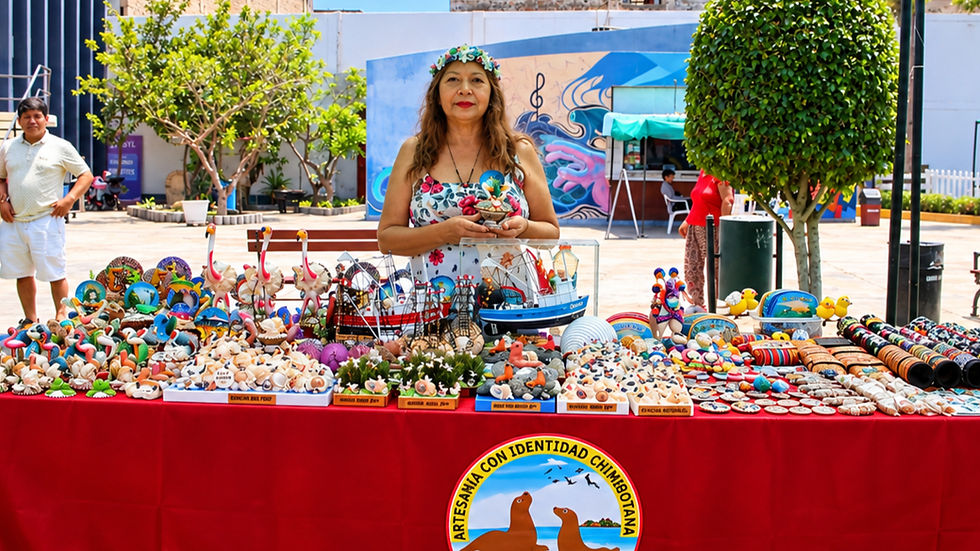
Craftsmanship in Chimbote is characterized by a strong maritime, coastal, and traditional identity, highlighting the work of local artisans and workshops in the area.
Various artisans, such as Doña Carmen Ancco, create handmade crafts such as coin purses, ornaments, pen holders, magnets, accessories, and jewelry boxes made with seashells like maruchitas, scallop shells, snails, pens, pumice stone, among others.
Dance is the Key

En Chimbote y la Provincia del Santa, la danza y el baile combinan tanto las tradiciones folclóricas de la región andina y costeña del Perú como las expresiones urbanas y modernas
En el ámbito urbano contemporáneo, Chimbote y la Provincia del Santa cuentan con una activa escena de baile, Academias y Estudios de baile como 7AM Dance Studio ofrecen entrenarte en géneros como baile urbano, reggaetón, commercial dance, K-Pop (muy popular entre jóvenes y adolescentes), sexy dance y heels.
Arte culinario

La gastronomía de Chimbote destaca por su rica tradición marina y la fusión con la cocina norteña y criolla, impulsada por su gran actividad pesquera.
The Capital of Ceviche offers a wide catalog of ceviche variations to travelers, in addition to the fish causa or Chimbotana causa, the fish stew (jugoso de pescado), duck with beans (frejolada de pato), the 'combinado', among other delicacies that can be found from small stalls in local markets, street carts, small eateries (huariques), and in any of the hundreds of cevicherías that exist in the Santa Province.
Ancestral art: millennial heritage

Ancestral art in Chimbote and the Santa Province constitutes one of the richest cultural and archaeological legacies in Latin America. Centuries before the expansion of the Inca Empire, various pre-Columbian civilizations dominated the area where Chimbote is located today, developing complex iconographies based on their worldview, their relationship with the ocean, and their sacred rituals.
Ancestral art stands out mainly through three major manifestations: Sculptural and pictorial ceramics, muralism and clay relief (monumental architecture), and advanced goldsmithing.